
How Strong study habits are not just about getting good marks. They build attention, patience, self-control, and confidence that children carry into every grade. When study routines begin early, children learn that progress comes from small, repeated efforts rather than last-minute stress. Early habits also reduce homework battles at home because expectations feel normal and predictable. The goal is to help children see learning as a daily practice, not a punishment or a race.
Start with a Simple Daily Routine
Children thrive with structure because it removes decision fatigue. Pick a consistent time for study that fits your family schedule, such as after a snack or after a short play break. Keep the routine short at first, then extend it gradually as attention grows. A reliable routine should include setting up materials, doing the work, checking it, and packing up. When children know the steps, they resist less and begin to manage the process more independently.
Create a Calm and Ready Study Space
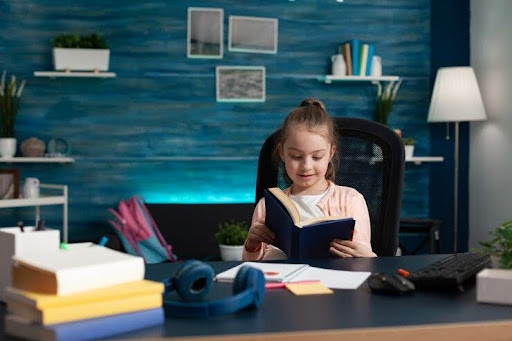
A good study space signals the brain that it is time to focus. Choose a spot with comfortable seating, good lighting, and minimal noise. Keep supplies nearby so children do not get up repeatedly and lose momentum. A small organizer for pencils, books, and worksheets prevents clutter from becoming a distraction. Choose Chitrakoota Kaushalya for your child if you are looking for a supportive early-learning environment that values structured routines and helps build consistent habits from the start.
Teach Focus in Small Time Blocks
Young children often struggle to sit for long periods, so focus should be trained in short bursts. Use a timer and aim for 10 to 15 minutes of concentrated work followed by a brief break. Over time, increase the work interval as the child succeeds. During focus time, encourage a single-task approach such as one worksheet, a short reading passage, or a set of math problems. This helps children learn what real concentration feels like without feeling overwhelmed.
Make Goals Clear and Child-Friendly

Children work better when they know what success looks like. Instead of saying “study hard,” give a specific target like “finish five sums,” “read two pages,” or “learn five new words.” Keep goals realistic so children experience completion often. Small wins build motivation and reduce avoidance. You can also help children track progress with a simple chart, not as pressure, but as a visual reminder that effort adds up.
Build Reading into Everyday Life
Reading is the foundation of most learning, and strong readers usually develop stronger study skills. Creating a daily reading habit that includes storybooks, simple non-fiction, and age-appropriate articles also highlights the benefits of early education by strengthening language, curiosity, and thinking skills from a young age. Let children choose some books to increase interest, and read together when possible. Ask simple questions like “What happened first?” or “Why did the character do that?” These conversations improve comprehension and make reading an active habit rather than passive entertainment.
Encourage Active Learning Methods
Many children think studying means staring at a page, but active methods improve memory and understanding. Teach them to underline key words, write short summaries, explain answers out loud, or make small flashcards for spelling and vocabulary. For math, ask them to show steps clearly and check their work. For science or social studies, simple diagrams and labels can help ideas stick. Active learning turns study time into a skill-building session, not just task completion.
Support Independence without Removing Guidance
Early habits become strong when children learn to take ownership. Let your child pack their bag, arrange their books, and attempt homework before you step in. At the same time, stay available to guide, especially when they feel stuck. Ask prompting questions instead of giving answers immediately, such as “What is the question asking?” or “Can you find an example in your notes?” This equilibrium lessens reliance and teaches problem-solving skills.
Use Praise that Reinforces Effort

The way adults praise children shapes their mindset. Focus on effort, strategies, and persistence rather than only results. Say things like “You stayed focused for the whole timer” or “I like how you checked your answers.” This helps children learn that improvement is in their control. When mistakes happen, treat them as normal and useful by reviewing what went wrong and planning the next step calmly.
Keep Technology Helpful, Not Distracting
Digital tools can support learning, but uncontrolled screen time can weaken focus. Set clear rules for devices during study, such as keeping phones away and using tablets only for specific educational tasks. Choose apps or videos that align with what the child is learning in school, then discuss what they learned afterward. When technology is intentional, it becomes a learning aid. When it is endless scrolling, it trains the brain to seek constant stimulation.
Conclusion
Building strong study habits from an early age is mainly about consistency, clarity, and encouragement. A simple routine, a calm study space, short focus blocks, and active learning strategies help children feel capable and in control. Independence grows when children practice managing small responsibilities with supportive guidance. Over time, these habits reduce stress, improve performance, and build a lifelong belief that steady effort leads to success. The earlier children experience this pattern, the easier learning becomes at every stage.
No responses yet