

Choosing a first school feels bigger than it looks. You are not just picking a building or a timetable; you are choosing the environment where your child will form early habits, attitudes and a sense of who they are. In a city as busy as Bangalore, the options can be overwhelming, and almost every school describes itself in glowing terms. The good news is that real quality shows up in small, observable details. Here are ten signs that tell you a Montessori school deserves a place at the top of your list, whichever campus you eventually visit.
1. The Montessori Method Is Followed Authentically
The first thing worth checking is whether a school genuinely follows the Montessori philosophy or simply borrows the name. In an authentic classroom, children choose their own activities, work with purpose-built materials and progress at their own pace while teachers guide quietly from the side. Learning feels calm and purposeful rather than rushed or driven by worksheets.
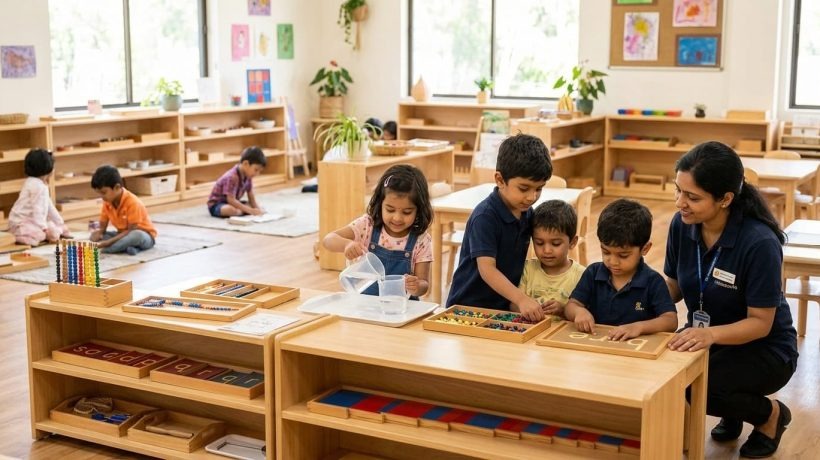
Chitrakoota describes its approach as pure Montessori for children aged two to six, which is the kind of clarity parents should look for. If that resonates with you, it is worth visiting the campus and seeing the classrooms in action before you apply to Chitrakoota Montessori.
2. Children Are Encouraged to Become Independent
Watch how children handle everyday moments. In a strong Montessori environment, little ones pour their own water, tidy their workspace and return materials to shelves without being reminded twice. These small responsibilities build confidence far more effectively than constant adult help ever could.
Ask yourself whether the room is arranged at a child’s height and whether children seem comfortable making their own choices. Independence at this age becomes the foundation for focus, self-discipline and a willingness to attempt difficult things later in school life.
3. Teachers Guide Rather Than Dictate
The best facilitators spend more time observing than lecturing. They notice what a child is curious about, introduce the next step at the right moment and step back once the child takes over. This approach respects each learner’s natural rhythm and avoids unnecessary pressure.
During a visit, notice how adults speak to children. Kind, patient and respectful communication tells you plenty about a school’s culture. Experienced, well-trained teachers who stay calm and attentive usually create classrooms where children feel secure enough to explore and ask questions.
4. Learning Happens Through Hands-On Activity
Young children understand the world through touch, movement and play. A good Montessori school replaces passive listening with sensory materials, practical tasks and creative exploration. Counting beads, sorting shapes and listening to stories become real experiences rather than abstract lessons.
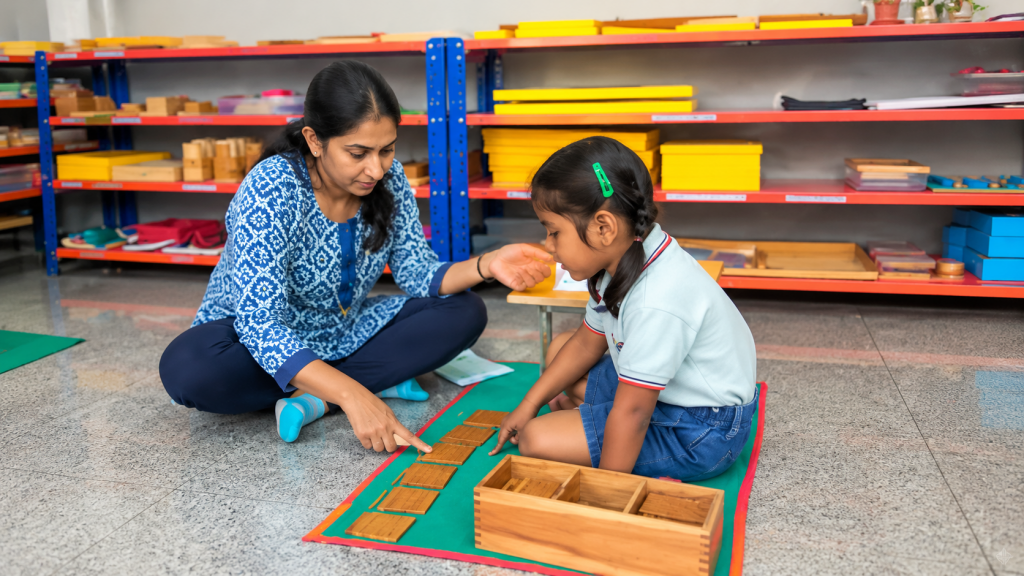
Look for evidence that activities are thoughtfully designed rather than random. When children stay absorbed in their work for long stretches, it is a clear sign that the materials match their interests and developmental stage, which quietly builds concentration and problem-solving ability.
5. Collaboration Builds Strong Social Skills
Montessori learning is not only individual. Children also work in small teams, share materials and learn to wait, listen and help one another. These everyday interactions teach cooperation far better than any lecture about good manners.
Pay attention to how children treat each other in the classroom. Gentle conversations, patient turn-taking and a willingness to include others suggest that the school values emotional growth alongside academics. Strong early social skills also make the move to formal schooling much smoother.
6. Safety Measures Are Visible and Well Thought Out
Parents should never have to wonder whether their child is secure. Look for practical safeguards such as round-the-clock security, CCTV monitoring, anti-skid flooring, purified drinking water and a campus designed to reduce everyday hazards. Well-ventilated classrooms and a wellness centre also show that health has been considered.
Ask the staff how these measures are maintained, not just whether they exist. A school that answers confidently and specifically has usually made safety part of its daily routine rather than a line in a brochure.
7. Transport Is Handled Responsibly
For many working families, the journey to school matters as much as the classroom itself. A dependable transport arrangement, with experienced drivers and a trained female assistant on board, offers real peace of mind. Smaller vehicles also tend to feel more manageable for very young children.

When comparing schools, ask how the commute is supervised and who looks after children during the ride. A fleet of small buses with a lady assistant present throughout is a good example of the attention that transport deserves.
8. Parents Are Kept in the Loop
Early education works best when home and school move in the same direction. A good school shares updates openly through regular emails, messages and conversations, so parents always know how their child is progressing and what is happening in class.
Notice how quickly and clearly staff respond to your questions during your first interactions. Warm, transparent communication at the start usually continues throughout the years. Parents who feel informed and respected are far more likely to support their child’s learning at home.
9. The Environment Feels Calm and Child-Centred
Step inside the classroom and trust your instincts. A thoughtful Montessori space feels orderly, warm and unhurried, with materials neatly arranged and children moving about freely. Natural light, fresh air and a serene campus all contribute to a child’s sense of ease.
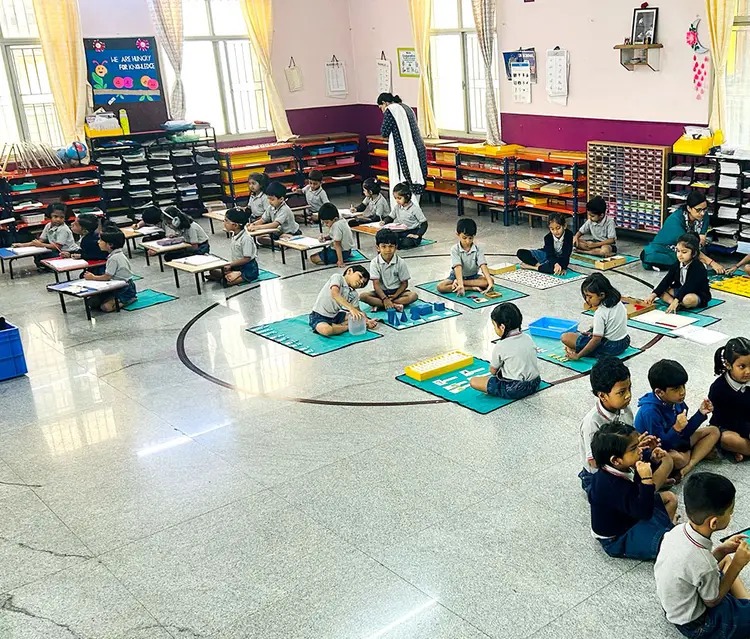
The surroundings should invite curiosity instead of demanding silence. When a child can explore, make mistakes and try again without pressure, they develop resilience and a genuine love for learning that stays with them far beyond the early years.
10. Your Child Looks Forward to Going Each Day
Perhaps the most reliable sign is also the simplest one. A child who wakes up eager to go to school, talks about what they made or discovered, and shows growing confidence at home is telling you that the environment is working.
Look for these changes over weeks and months: longer attention spans, more independence with daily tasks and a natural enthusiasm for new ideas. Happiness and curiosity are the best measures of whether a school is truly right for your little one.
Conclusion
Finding the best Montessori school in Bangalore is less about reputation and more about fit. When authentic methods, caring teachers, visible safety, reliable transport and open communication come together, children thrive. Visit more than one campus, observe the classrooms, and ask questions until you feel confident. The right choice is the one where your child can grow with curiosity, independence and joy, and where you feel like a trusted partner in that journey.
No responses yet